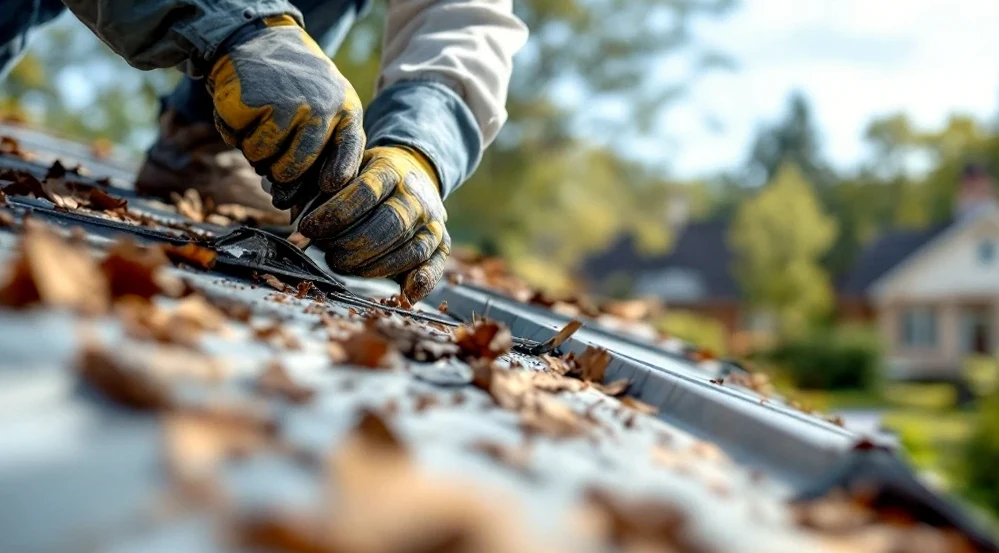
What is Metal Roof Leak Repair and how does it work?
Metal roof leak repair is finding the exact breach in a metal roof system, then closing it without trapping water behind the fix. On standing-seam and exposed-fastener roofs, that usually means resealing a failed seam, replacing a backed-out screw with a larger one and a neoprene washer, or rebuilding the flashing around a vent, chimney, or valley.
Metal roofing is different from asphalt in one big way: the metal itself almost never fails. A 24-gauge standing-seam panel will outlive most of the houses it sits on. What fails is everything attached to it or punched through it. That is why metal roof leak repair is less about patching a hole and more about restoring the joints, seals, and penetrations that hold the roof together.
In Birmingham, that distinction matters. We get roughly 55 inches of rain a year, most of it in bursts, plus summer afternoons that push attic temperatures past 140 degrees. That combination works on sealant and rubber washers the way a dishwasher works on a cheap plastic lid. A bead of urethane that looked fine in March can be chalky and cracked by September.
So a proper repair starts with water testing, not with a tube of caulk. We get on the roof, isolate the wet area from inside, and run a hose over sections until the leak shows itself. Chasing a metal roof leak by eye alone is how homeowners end up sealing three seams that were never the problem and still watching a stain spread across the ceiling in Mountain Brook or Vestavia Hills.
Once we find the entry point, the repair itself is usually quick. The prep is what takes time: wire-brushing the old sealant out of the seam, drying the metal, priming bare spots, and setting the new sealant or butyl tape so it can move with the panel instead of fighting it.
- Standing-seam panels: leaks cluster at seams, end laps, ridge caps, and panel terminations.
- Exposed-fastener panels (the ribbed kind with screws showing): leaks cluster at the screws themselves.
- Both types: penetrations like plumbing vents, furnace flues, satellite mounts, and chimney flashing cause the most callbacks.
- Almost never: a hole in the middle of an intact panel, unless something fell on it or a hail event dented and split it.
Short version
- Metal is rarely the problem. Seams, screws, and flashing are.
- Water testing finds the leak. Guessing does not.
- Sealant has a service life in Alabama heat. It gets renewed, not replaced forever.
- A panel replacement is a last resort, not a first move.
How Metal Roof Leak Repair works, start to finish
A repair runs in five stages: locate the leak with water testing, inspect the whole roof system while we are up there, prep the failed joint, seal or replace the failed component, then verify with another water test. Cut the verification step and you will be back on the phone booking a second service call.
Step one is the interior check. Water travels. A stain on a hallway ceiling in Homewood might trace back to a vent boot fifteen feet away and two rafters over. We look at the underside of the deck, the rafters, and the insulation to get a direction of travel before we go up.
Step two is the roof walk. We inspect every seam, every fastener row, every penetration, and every transition. This is where we find the second problem the homeowner did not call about. On a 20-year-old exposed-fastener roof, it is common to find forty screws with cracked washers when only one is leaking today. Fixing one and leaving the rest is a scheduled callback.
Step three is prep, and it is the step cheap repairs leave out. Old sealant has to come out, not get covered. Metal has to be dry and clean or nothing sticks. Bare or rusted spots get wire-brushed and primed. If a seam has opened because the panels were installed with too little clearance, we address that too, because sealing a seam that is still being pushed apart will fail again.
Step four is where we do the repair. Options include a high-grade urethane or silicone sealant for a seam, butyl tape under a lifted edge, a larger screw with a new EPDM washer for a stripped fastener, or a new boot or flashing assembly for a penetration. For a badly damaged panel, we cut out the section and install a matching replacement, which is more involved than most homeowners expect because the panel has to interlock with the ones beside it.
Step five is verification. We run water over the repaired area with someone inside watching. If it is dry, the job is done. If not, we are still on the roof and we keep looking. This is the difference between a repair and a guess.
- Trace it from inside.Find the wet deck, follow the rafters, and get a direction. Water rarely drops straight down.
- Walk the whole roof.Inspect seams, fasteners, penetrations, and flashing. Note everything, not just the leak.
- Prep the joint.Remove old sealant, dry the metal, prime bare spots. This is where most repairs are won or lost.
- Seal or replace.Urethane sealant, butyl tape, new washers, new flashing, or a panel section.
- Water test again.Confirm the fix with someone inside watching. No confirmation, no done.
Why Metal Roof Leak Repair matters for your home
A metal roof leak that goes unfixed does not stay a roof problem. Water gets into the deck, the insulation, and the ceiling, and in Birmingham's humidity that wet wood becomes a mold problem within a few weeks. Catching it early keeps the repair in the hundreds instead of the thousands.
Metal roofs are often sold as maintenance-free, and that word gets homeowners in trouble. They are low-maintenance compared to asphalt shingles, but the sealants and washers holding them together have a lifespan measured in years, not decades. A homeowner in Hoover who bought a house with a 15-year-old metal roof and never had it looked at is exactly the call we get most often in late spring.
The other reason it matters is structural. A metal roof is usually installed over purlins or a solid deck with underlayment. Once water gets past the underlayment, it sits against wood in a hot attic. That is a mold incubator. By the time you see a brown ring on the ceiling, the deck above it has been wet for a while.
There is also the resale angle. A metal roof with active leaks and rust streaks around fasteners is a red flag on any inspection report, and it gives a buyer use. A metal roof that has been maintained and resealed shows up as an asset. The difference between those two outcomes is usually a few hundred dollars of preventive work spread over years.
And then there is the insurance piece. Most policies cover sudden damage from wind or hail, but they do not cover wear and tear or deferred maintenance. If a leak traces back to sealant that failed from age, that is on the homeowner. Documenting repairs and keeping the roof maintained is how you stay on the right side of that line.
Minor stain on ceiling
Small brown ring, no active drip. Get it looked at within a few weeks. The source is usually a seam or fastener.
Active drip during rain
Water is entering every storm. Book a repair within days. Wet deck and insulation are accumulating damage.
Sagging ceiling or mold smell
The deck is saturated. This is a repair plus possible drywall and insulation replacement. Call today.
Common problems and what causes them
In Birmingham, the same five failures cause most metal roof leaks: failed sealant at seams, backed-out or rusted fasteners, cracked pipe boots, improperly installed flashing at chimneys and valleys, and panels that were installed too tight and buckled. Each one has a different fix.
Failed seam sealant is number one. Standing-seam panels move with temperature, and the sealant in the seam has to stretch and compress with them. Cheap sealant loses that flexibility in two or three summers. When it cracks, water wicks into the seam and shows up inside. The fix is to clean the seam out completely and re-seal with a product rated for metal roof movement, not a generic hardware-store caulk.
Backed-out fasteners are number two, and they are almost always on exposed-fastener roofs. The screw works loose over years of thermal cycling, the neoprene washer dries out and cracks, and water runs straight down the threads. You can spot these from the ground as a line of rust streaks below the screw line. The repair is to replace the screw with a slightly larger one and a fresh washer, not to smear sealant over the head.
Cracked pipe boots are number three and they are sneaky. The rubber collar around a plumbing vent cracks in the sun, and the leak shows up ten feet away against a wall. Homeowners often blame the wall flashing. We check the boots first because they fail more often and cost less to fix.
Chimney and valley flashing is number four. This is where installation quality matters most. If the flashing was step-flashed correctly, it lasts. If someone relied on sealant alone, it will leak. And number five is thermal buckling, which happens when panels were installed with too little room to expand. The panels push against each other, seams open, and no amount of sealant will hold them shut until the clearance issue is addressed.
- Rust streaks below the screw line: backed-out fasteners with failed washers.
- Stain near a wall or chimney: check pipe boots and step flashing before blaming the wall.
- Leak that only shows in heavy rain: often a valley or a seam that only backs up under volume.
- Leak that shows in light rain: usually a penetration or an open seam.
- Leak after a cold snap: thermal contraction opened something that was marginal.
Worth repairing
- Isolated seam or fastener failures on an otherwise sound roof
- Cracked pipe boots and vent seals
- Flashing that was installed wrong and can be rebuilt
- Surface rust that has not perforated the panel
Consider replacement
- Widespread rust-through across multiple panels
- Panels installed with no thermal clearance, causing recurring seam failures
- A roof past 30 years with failing underlayment
- Multiple leaks in different areas at the same time
What most homeowners get wrong about metal roof leaks
The biggest mistake is treating a metal roof leak like an asphalt shingle leak. You cannot slap a patch over a seam and call it done. Metal moves, and any repair that does not allow for that movement will fail within a season or two.
The second mistake is sealing from the ground or from a ladder with a caulk gun. It looks fine from below. It rarely bonds to a dirty, damp seam, and it traps water against the metal, which accelerates rust. We have pulled off plenty of homeowner caulk jobs in the Birmingham area and found rust underneath that would not have been there otherwise.
The third mistake is assuming the leak is where the stain is. Water follows the path of least resistance, which on a metal roof often means running along a purlin or a panel rib before it drops. We have traced a ceiling stain in Irondale back to a ridge vent thirty feet away.
The fourth mistake is ignoring the small stuff. A single backed-out screw does not seem urgent. But it is the first of many, and the washers on the rest of the roof are the same age. If one has failed, the others are on the same clock. A homeowner who fixes one screw and waits two years usually ends up paying for a full fastener replacement instead of a spot repair.
And the fifth mistake is not documenting anything. When you sell the house, a buyer's inspector will ask about the roof. If you have receipts and photos from repairs, that is a maintenance record. If you have nothing, the inspector writes it up as unknown condition, and the buyer asks for a credit.
Metal does not leak. The holes in it do.
When to call us versus when to wait
Call us when you see an active drip, a ceiling stain that is growing, or rust streaks on the roof. You can wait a few weeks on a single small stain if it is not raining, but do not wait through a storm season. Birmingham gets most of its rain between November and March, and that is when small leaks become big ones.
A stain that appeared once and has not grown is usually a slow leak that only shows under specific wind-driven rain. It still needs fixing, but it is not an emergency. A stain that is spreading, or a drip you can hear, is water entering every storm. That one moves to the front of the list.
If you have a metal roof and you have never had it inspected, a spring inspection is worth doing. We check seams, fasteners, boots, and flashing, and we can tell you what is marginal and what is fine. It is cheaper to reseal a seam on a dry day than to repair water damage after a wet winter.
We work all over the Birmingham metro, from Trussville to Bessemer to Pelham. If you are not sure whether your roof needs attention, send us a photo of the stain or the rust streak. We can usually tell you whether it is a repair or a wait-and-watch from the picture.
Spring
Best time for inspection and preventive sealing. Catch marginal seams before summer heat cycles them further.
Summer
Thermal expansion is at its peak. Leaks that show now are often seam or fastener related.
Fall
Last window to repair before the rainy season. Leaves and debris can clog valleys and cause backup.
Winter
Peak leak season in Birmingham. Wind-driven rain finds every weak point. Repairs are more urgent and sometimes weather-dependent.
Frequently Asked Questions
How do I know if my metal roof is leaking or if it is condensation?
Condensation shows up as moisture on the underside of the metal, often on the whole roof deck, and it is worse in cold weather. A leak shows up as a stain or drip in one area, usually after rain. If the moisture appears without rain, it is likely condensation from a ventilation problem, not a roof breach.
Can you repair a metal roof leak without replacing the whole roof?
Yes, in most cases. Isolated seam failures, backed-out fasteners, cracked pipe boots, and flashing problems are all repairable. Full replacement is only needed when there is widespread rust-through, the panels were installed with no thermal clearance and keep failing, or the underlayment is shot.
How long does a metal roof leak repair last?
A properly prepped and sealed seam or fastener repair should last five to ten years in Birmingham's climate, depending on the product used and the roof's exposure. Cheap caulk might last one season. The prep work matters more than the brand of sealant.
Do metal roofs leak more than shingle roofs?
No, but they leak differently. Shingles fail from granule loss and cracking. Metal fails at seams, fasteners, and penetrations. A well-installed and maintained metal roof leaks less than asphalt over its lifetime, but it does need periodic attention to sealants and washers.
What does metal roof leak repair cost in Birmingham?
Cost depends on the type of repair, roof pitch, and accessibility. A single fastener or pipe boot repair is on the lower end. A multi-seam reseal or flashing rebuild is higher. We give a free on-site quote so you know the number before we start, and we do not upsell work the roof does not need.
Can I seal a metal roof leak myself?
You can, but the results are usually temporary. The prep is the hard part: removing old sealant, drying the metal, and priming. Most homeowner repairs fail because they seal over a dirty or damp surface. If you do it yourself, use a sealant rated for metal and clean the area thoroughly first.
How do I find a leak on a metal roof?
Water testing is the most reliable method. We isolate sections and run water over them while someone watches inside. Visual inspection alone misses leaks that travel along purlins or ribs before dropping. If you are trying to locate it yourself, start near the stain and work uphill, checking seams and penetrations.
Will insurance cover metal roof leak repair?
Insurance typically covers sudden damage from wind, hail, or falling debris. It does not cover wear and tear, failed sealant, or deferred maintenance. If the leak is from age, expect to pay out of pocket. If a storm caused it, document the damage and file a claim before repairing.
How often should a metal roof be inspected in Birmingham?
Once a year is a good baseline, ideally in spring before the summer heat and fall before the rainy season. If your roof is over 15 years old or has exposed fasteners, twice a year is better. An inspection is cheaper than water damage.
What is the best sealant for a metal roof leak?
A high-grade urethane or silicone sealant rated for metal roofing and thermal movement. Butyl tape is good for sealing under lifted edges and flashing. Avoid generic hardware-store caulk, which dries out and cracks within a year in Alabama heat.
Need roof leak repair in Birmingham? Get a free estimate today.
📞 256-363-5379